
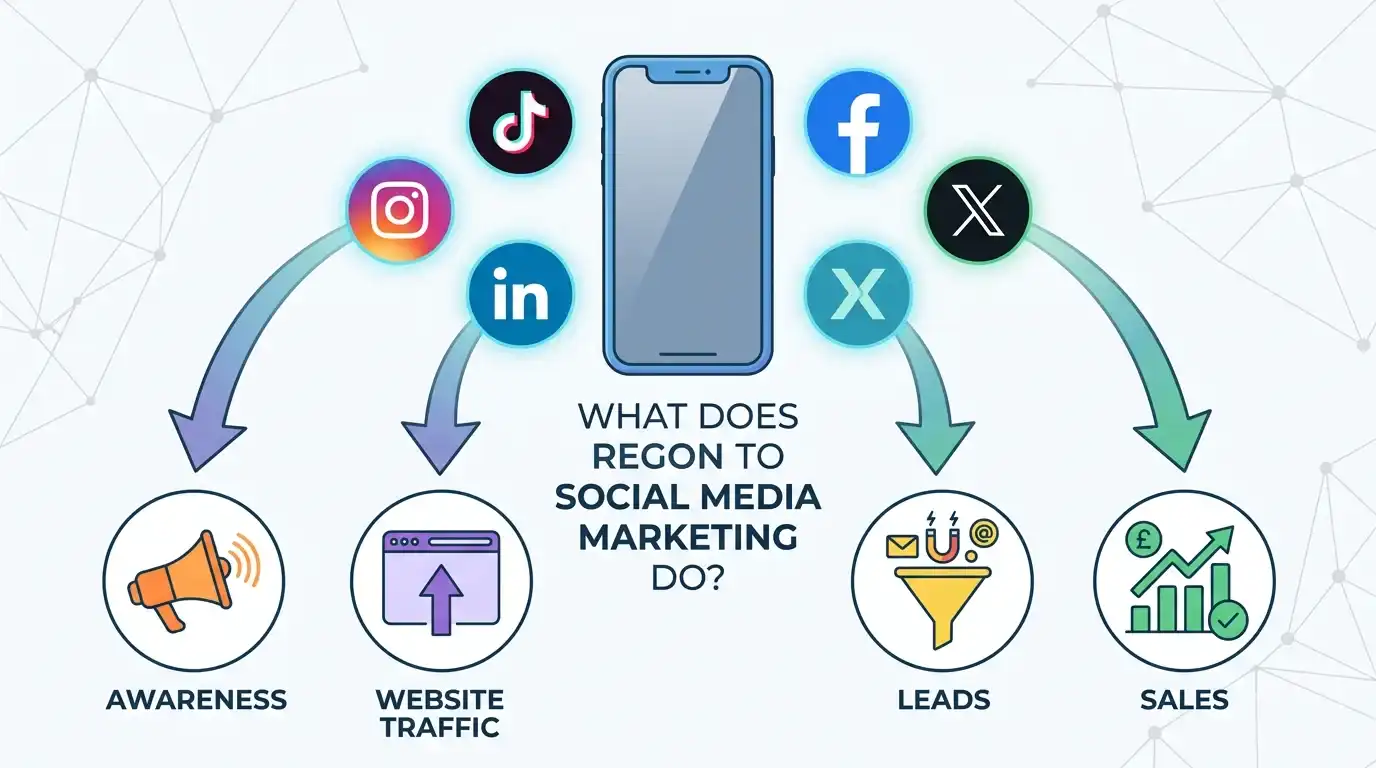
Social media is not simply about posting photographs and gaining followers anymore. What does social media marketing do? Simply put, it helps a business connect with the right people, create trust, spark conversation, drive traffic to its website, generate leads, and boost sales.
A solid social media marketing plan links content to corporate objectives. It gives a purpose to every post, from creating brand recognition to addressing a customer’s issue to getting someone to take the next step, rather than just posting to be posting.
What Is Social Media Marketing?
Social media marketing involves leveraging sites like Instagram, Facebook, LinkedIn, TikTok, and X to promote a business, interact with a specific audience, and transform followers into consumers. It creates a brand’s online presence and reputation through content development, paid advertising, and direct engagement.
You aren’t blogging only when you feel like it. The right way is to have a plan developed around your ideal consumer, a content calendar, and a way to monitor whether any of it is working.
Most businesses utilise a combination of two things: organic content (posts, stories, videos you distribute for free) and paid social ads (boosted posts, targeted campaigns). They are all under the same umbrella, but act differently. We’ll get to that in a moment.
What Does Social Media Marketing Actually Do for a Business?
Understanding what does social media marketing do begins with its impact on your bottom line. It transforms passive online viewers into active brand advocates.
1. Drives Targeted Website Traffic
Social channels act as distribution pipelines. Sharing blog posts, product pages, and special offers directs high-intent users straight to your site.
2. Captures Qualified Leads
Interactive posts, lead forms, and targeted ads attract users matching your exact buyer persona. This builds your sales pipeline efficiently.
3. Delivers Real-Time Customer Insights
Social listening tools reveal customer demographics, pain points, and interests. You learn what your target audience values without expensive market research.
Which Platforms Does Social Media Marketing Use?
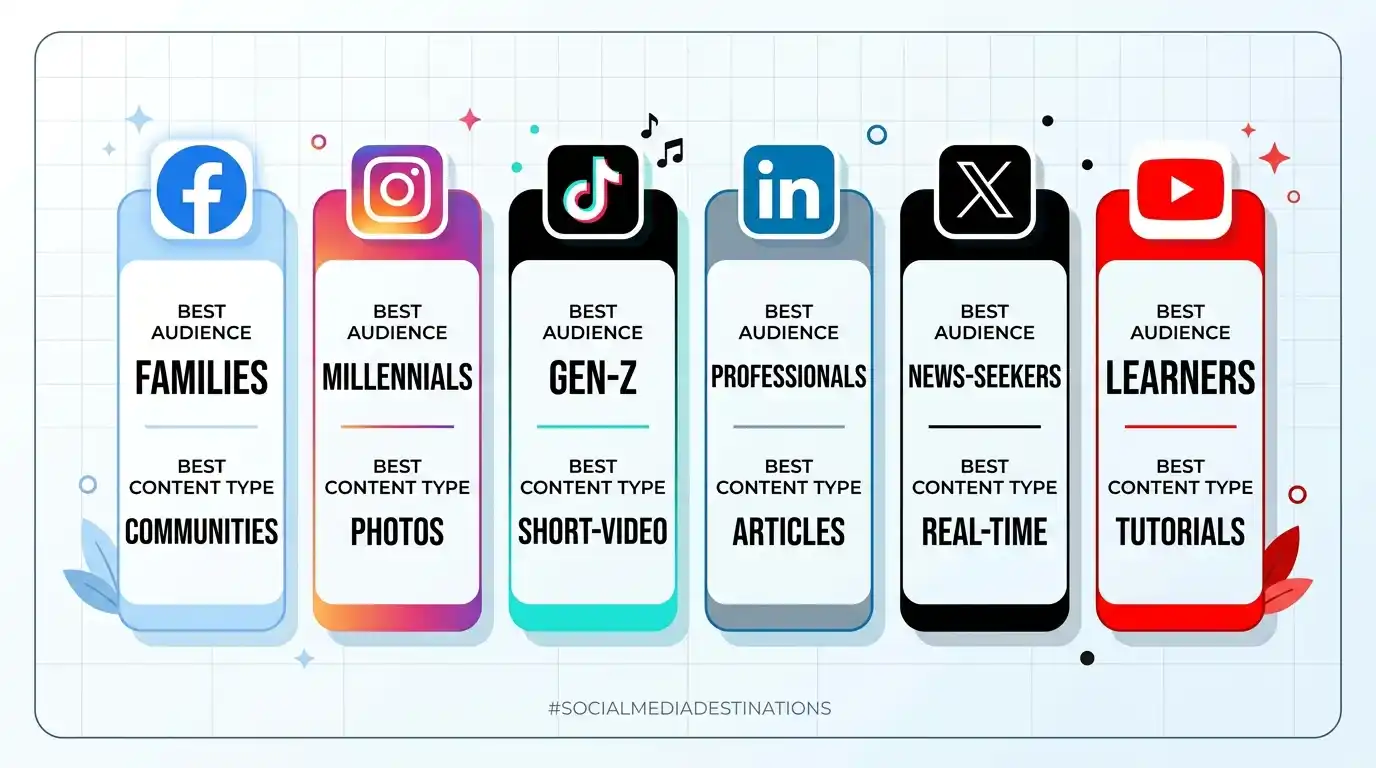
Different platforms serve different purposes, and picking the wrong one wastes time and budget. Here’s a short breakdown of where businesses typically focus their efforts.
- Facebook – Broad reach, useful for community groups, events, and paid ads aimed at a wide range of ages.
- Instagram – Strong for visual brands, product photography, and short-form video aimed at younger and middle-aged audiences.
- TikTok – Best for short, entertaining video content aimed at a younger, fast-scrolling audience.
- LinkedIn – The go-to for B2B marketing, hiring, and building authority among professionals.
- X (Twitter) – Useful for real-time updates, customer service, and joining public conversations.
- YouTube – Suited to long-form video, tutorials, and brand storytelling that needs more than 30 seconds to land.
Most businesses don’t need to be everywhere. Two or three platforms, chosen based on where your ideal customer actually spends time, will outperform a thin presence spread across six.
What Are the Benefits of Social Media Marketing?
The benefits of social media marketing include stronger brand visibility, closer customer relationships, more website traffic, lead generation, customer feedback, reputation management, and support for sales. Results depend on the audience, platform, content quality, offer, consistency, and how well social activity connects with business goals.
Social media can support several parts of a marketing system at once.
Key benefits include:
- Brand awareness: More relevant people can become familiar with the business.
- Audience reach: Content can reach people outside an existing customer base.
- Customer relationships: Comments and messages create direct communication.
- Website traffic: Useful content can send qualified visitors to important pages.
- Lead generation: Offers, forms, consultations, and landing pages can turn interest into inquiries.
- Customer loyalty: Ongoing communication can keep existing customers connected.
- Market research: Audience reactions can reveal needs and objections.
The key is to measure business outcomes rather than treating follower numbers as the final goal.
Social Media Marketing vs. Traditional Marketing
Traditional marketing relies on one-way broad broadcasting. Social media relies on two-way active conversation.
| Feature | Traditional Marketing | Social Media Marketing |
| Communication Direction | One-way (TV, Radio, Print) | Two-way (Direct Messages, Comments) |
| Audience Targeting | Broad regional demographics | Niche buyer persona attributes |
| Cost Structure | High upfront investment | Flexible, scalable budgets |
| Data Real-Time Tracking | Delayed estimate reports | Instant analytics and ROI metrics |
| Content Adaptation | Static campaigns | Dynamic real-time adjustments |
Organic vs. Paid Social Media Marketing: Understanding the Difference
A successful social media strategy balances organic growth with paid amplification.
Organic Social Media
- Builds long-term community trust.
- Nurtures existing customer relationships.
- Showcases company culture and brand voice.
Paid Social Media
- Targets specific customer interests, job titles, and locations.
- Guarantees immediate impressions and reach.
- Scales lead generation and direct product sales rapidly.
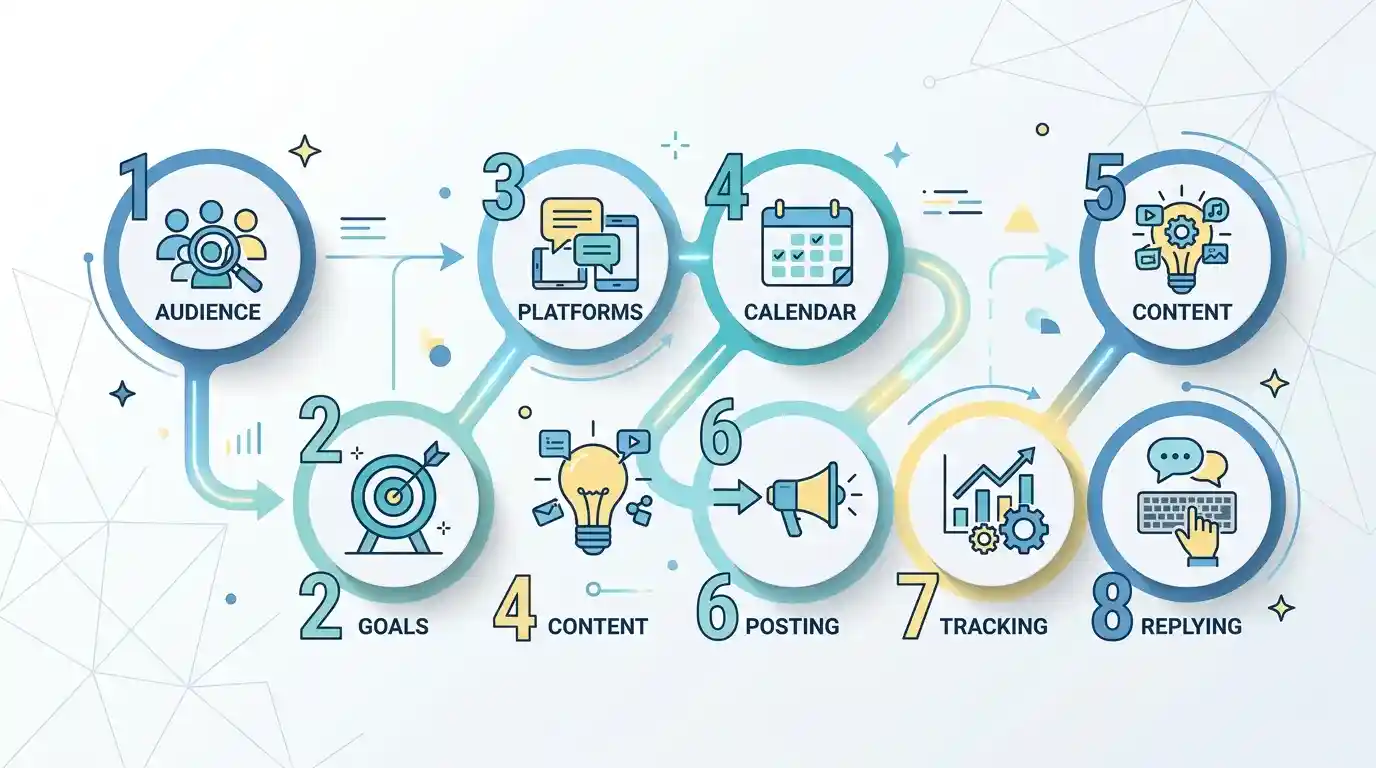
8 Steps to Build an Effective Social Media Strategy
1. Define Your Target Audience
To identify your ideal customer, analyze current buyer demographics, customer behaviors, and key pain points. Collect accurate data to construct a clear buyer persona before launching campaigns.
2. Set Clear SMART Goals
Align your social media objectives with overall business targets using specific, measurable metrics. Focus on reach, click-through rates, and conversion goals rather than simple vanity metrics.
3. Analyze Competitor Strategies
Study top market competitors to spot gaps in their content offerings and engagement styles. Use these observations to differentiate your brand’s message.
4. Select the Right Channels
Choose 2-3 main social media platforms where your target audience actively spends time. Avoid spreading resources too thin across every emerging network.
5. Build a Content Calendar
Plan posts ahead of time to maintain steady posting schedules across every chosen network. Consistency signals reliability to platform algorithms and human followers alike.
6. Produce Original Content
Create helpful posts that resolve common user challenges and spark meaningful discussions. Mix visual posts, short videos, and educational text updates.
7. Measure Performance Metrics
Track customer engagement rates, click-throughs, website referrals, and campaign conversions routinely. Use analytics data to refine future content releases.
8. Track Performance
Watch metrics such as reach, impressions, engagement rate, website traffic, leads, conversion rate, and revenue where tracking is available.
How Much Does Social Media Marketing Cost?
Social media marketing costs vary widely, from a few hundred pounds a month for a small business managing its own content, to several thousand pounds a month for a full-service agency handling strategy, content creation, and paid ads. Paid advertising budgets are separate and can start from as little as £5 to £10 a day.
DIY approaches cost time rather than money, and time has a price too. Hiring a freelancer typically sits in the low hundreds per month for basic management.
Agencies offering full social media marketing services usually charge more, but they bring strategy, design, and analytics under one roof. For most growing businesses, the return comes from consistency that’s hard to replicate part-time.
Social Media Marketing Services in London
If reading through all of this has made one thing clear, it’s that social media marketing for businesses takes more than an hour a week and a phone camera. It takes a plan, consistent execution, and someone watching the numbers closely enough to adjust course.
That’s exactly the work we do at Growo. We offer social media marketing services in London built around a business’s actual goals, whether that’s brand awareness, leads, or straight-up sales, backed by the same strategy and platform choices covered in this guide. If you’d rather hand this off to people who do it daily, our social media marketing services page has the details.
Final Thoughts
So, what does social media marketing do, in one line? It puts a business in front of the right people, keeps them interested, and gives you the data to keep improving. Get the target audience right, stay consistent, and measure what matters, and the rest tends to follow.
If you’d like help putting a strategy like this into action, contact us at Growo and we’ll walk you through where to start.
FAQs
What does social media marketing do for a small business specifically?
For a small business, social media marketing builds local visibility, brings in website traffic without a large ad budget, and creates a direct line to customers through comments and messages. It’s often the most affordable way for a new business to compete with larger, established brands.
A single well-performing post can reach thousands of local customers for free, something a small print ad budget could never match.
How long does it take to see results from social media marketing?
Most businesses start seeing engagement within a few weeks, but meaningful traffic and sales growth usually takes three to six months of consistent posting. Paid campaigns can show faster results, sometimes within days, since they don’t rely on organic reach.
Patience matters here. A single viral post is luck, a steady stream of leads is strategy.
What is the difference between social media marketing and social media management?
Social media marketing focuses on strategy, growth, and results, while social media management covers the day-to-day tasks like scheduling posts and responding to comments. Most businesses need both working together, not one without the other.
Which social media platform is best for social media marketing?
There isn’t one universal answer. The right platform depends entirely on the target audience, a younger, visual brand suits Instagram or TikTok, while a B2B company usually gets better results on LinkedIn.
Do I need a big budget to start social media marketing?
No. Organic content costs nothing but time, and small paid campaigns can start from just a few pounds a day. Budget matters less than consistency and knowing exactly who you’re trying to reach.

